From Gutenberg to KDP
How a book arrived as fifty-one photographs — and became Candi Press, volume one.
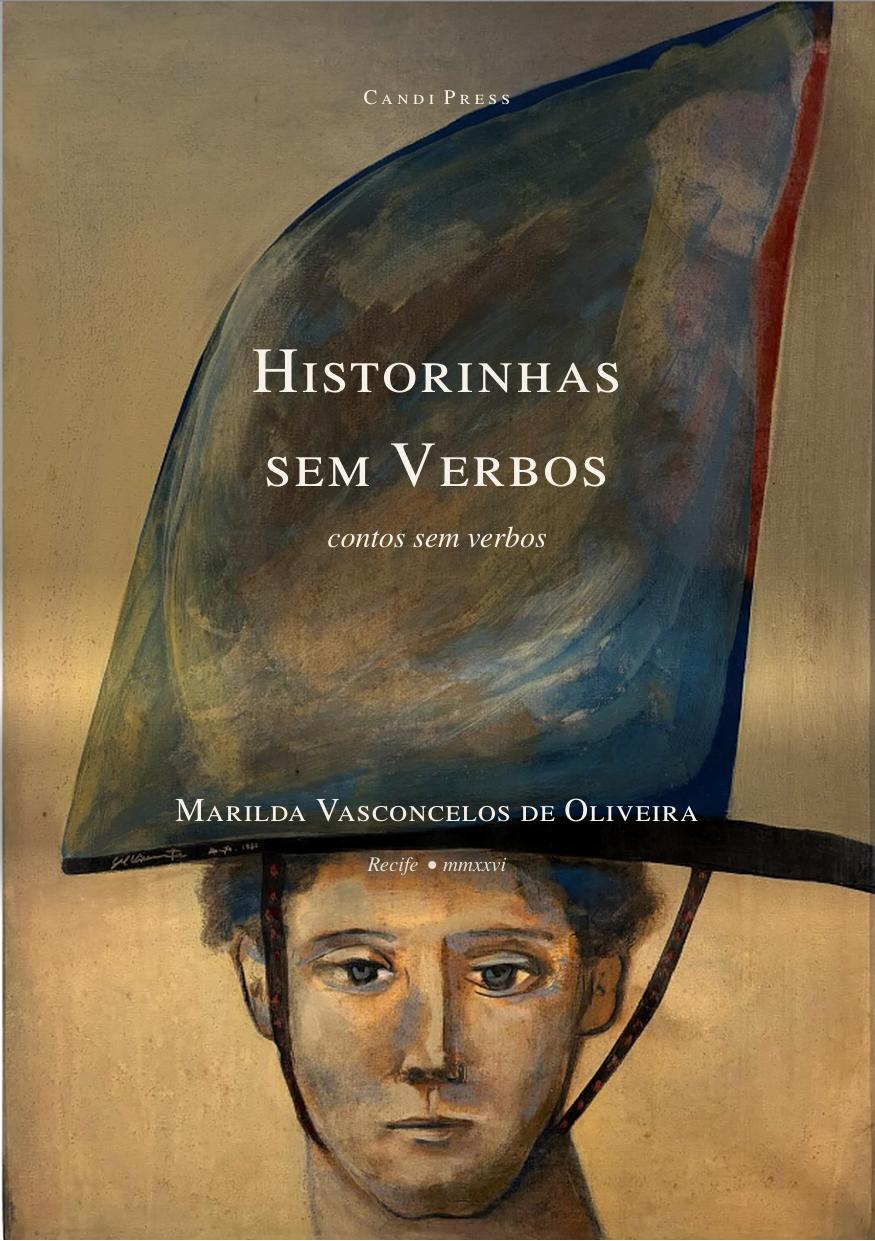
The making of one small book carries the whole argument. It arrived with no file and no scan — fifty-one phone photographs of a dead author’s typed manuscript, laid out on a flowered tablecloth.
The author was Marilda Vasconcelos de Oliveira, and she had done something rare: she had written a whole book of tales without a single verb. A constrained feat — you can set it beside Joyce’s unpunctuated Molly or Perec’s lipogram — and one that asks the type to recede and let the constraint speak. But before any of that could matter, the book had to be recovered from a shoebox of images.
The invariant the object already holds
You do not begin by reading. You begin by correcting the image — deskew, contrast, upscale — before a single word is transcribed. Then you read in parallel passes, and you reassemble the pile not by guesswork but by the printed page number each leaf already carries. The object tells you its own order; you only have to trust it. One leaf — page 15, the opening of “A Professora” — was simply missing. It came home weeks later, when the author’s son found it and photographed it too.
There was a word, degraded almost past reading, that a first pass rendered apnumado. The machine, asked to be helpful, guessed apurado. Straightened and magnified, the plate showed something else again: aprumado — and the author herself confirmed it, elsewhere in the same manuscript, where she had used the word cleanly. That is the whole discipline in one word. The eye is the last judge.
The anatomy of a page
Then the book had to be given a body. A5, Palatino rather than Garamond — warmth over delicacy — a wide gutter, chapters opening on the right-hand page, blank versos left truly blank, old-style folios centered at the foot. Widows and orphans hunted down; the lone line stranded at the top of a page killed. And a quiet crisis: the print shop’s typesetting engine had no Brazilian hyphenation at all, so deixado broke as deix-ado. The fix was to fetch the pattern file and rebuild the format itself to install the language — repair at the level of the tool, not the page.
The cover, from another son
Marilda disliked seeing her photograph in public, so the front became a painting by her son, the painter Gil Vicente — oil on canvas, 1980 — an art-led literary cover in the manner of the books you see on the good shelves today, with a navy spine drawn straight from the painting and an aqua-green back. Every block of type was tuned by eye until it sat right in its space.
And then the new Gutenberg: the book was entered into Amazon’s three-tab form — author, Marilda; editor, myself; imprint, Candi Press; series, Coleção Candi Press — given a free ISBN, and shipped. From a flowered tablecloth to a paperback anyone can buy.
That is what the press is for. Restoration from nothing but images; a constraint carried faithfully into type; a missing language installed so the words break correctly; a cover led by art; and, from first photograph to final page, the trained human eye as the final judge — of a word, and of a page.